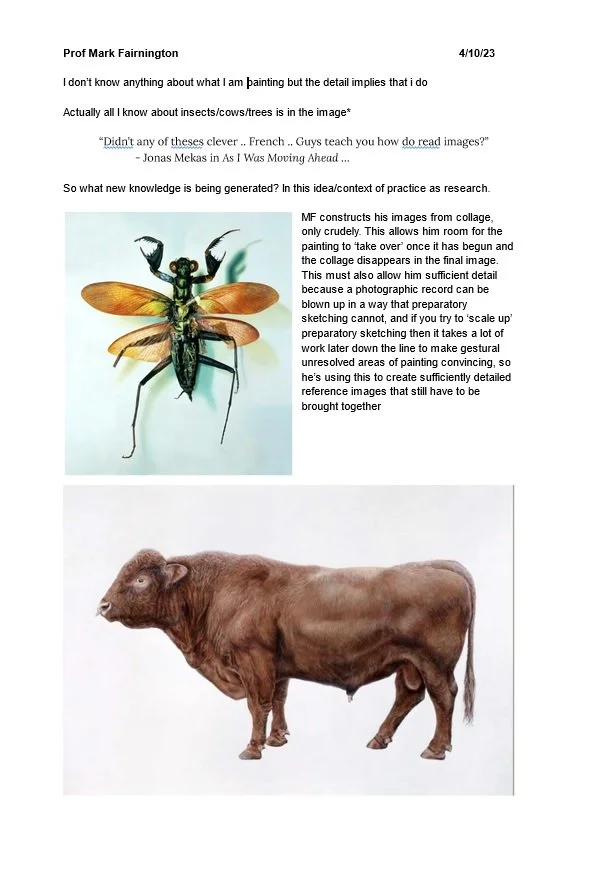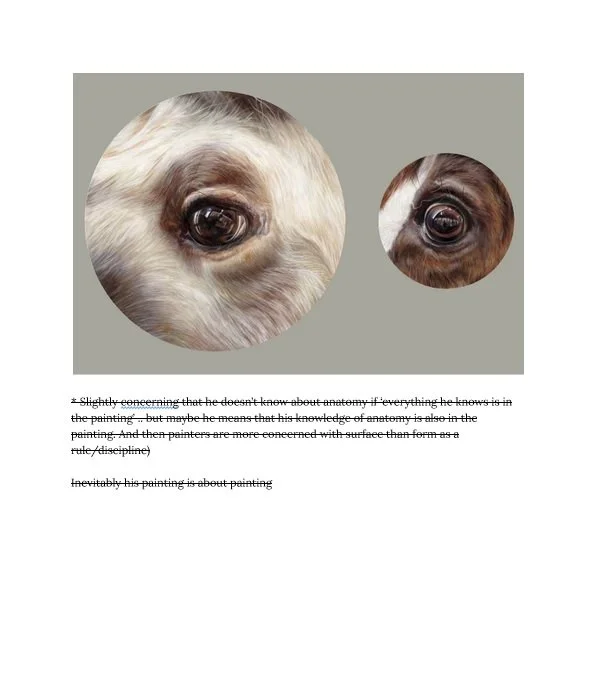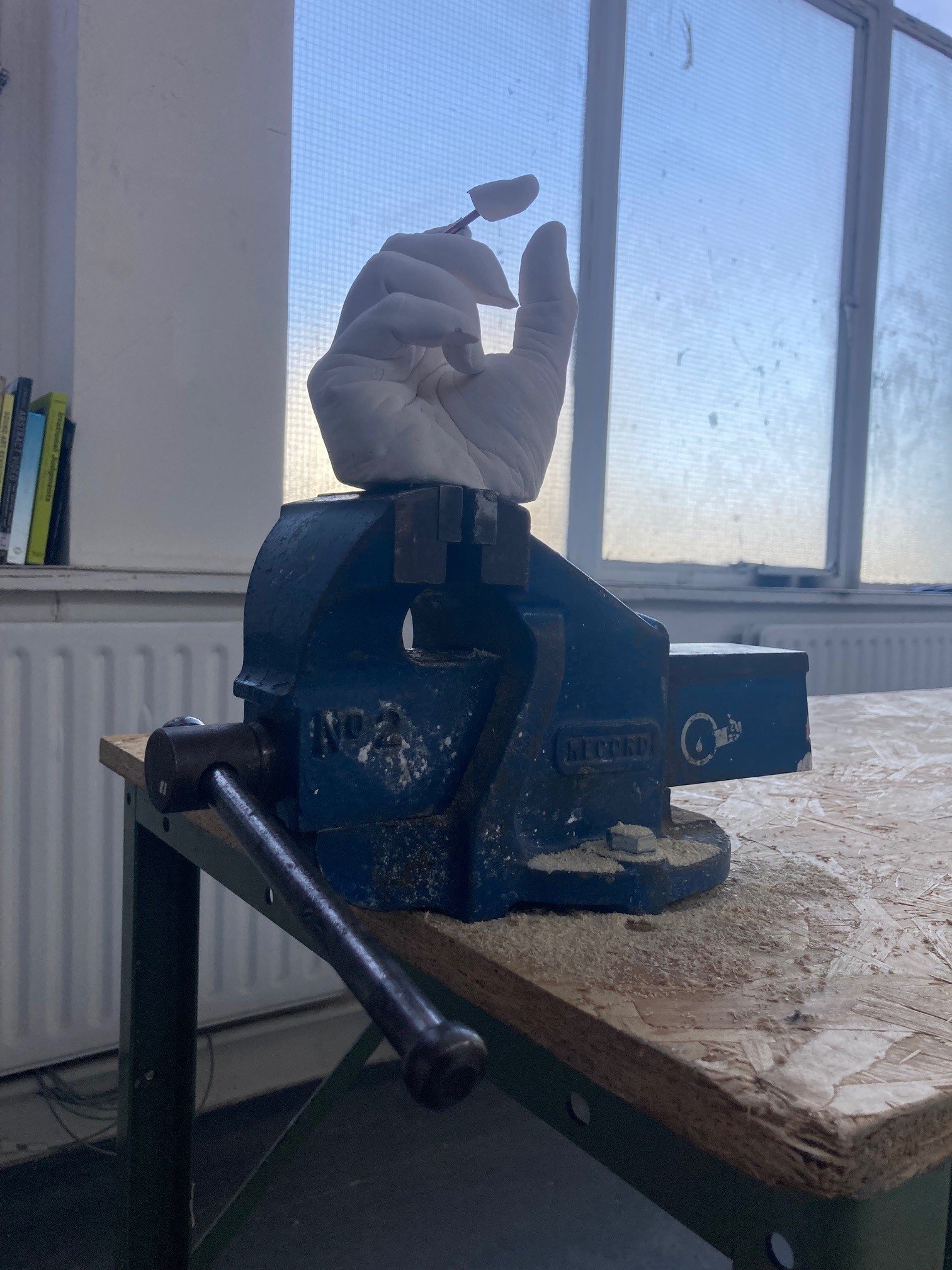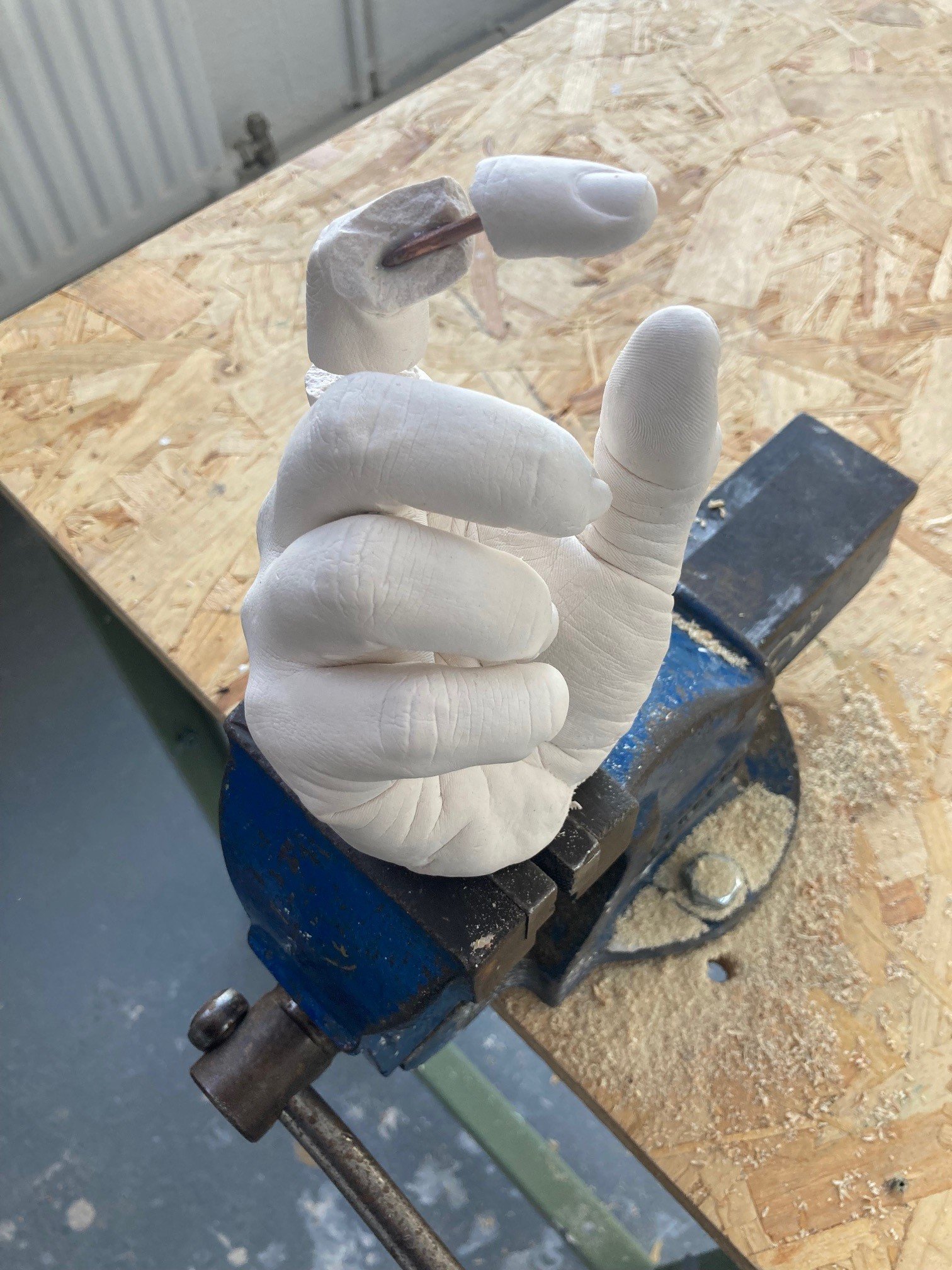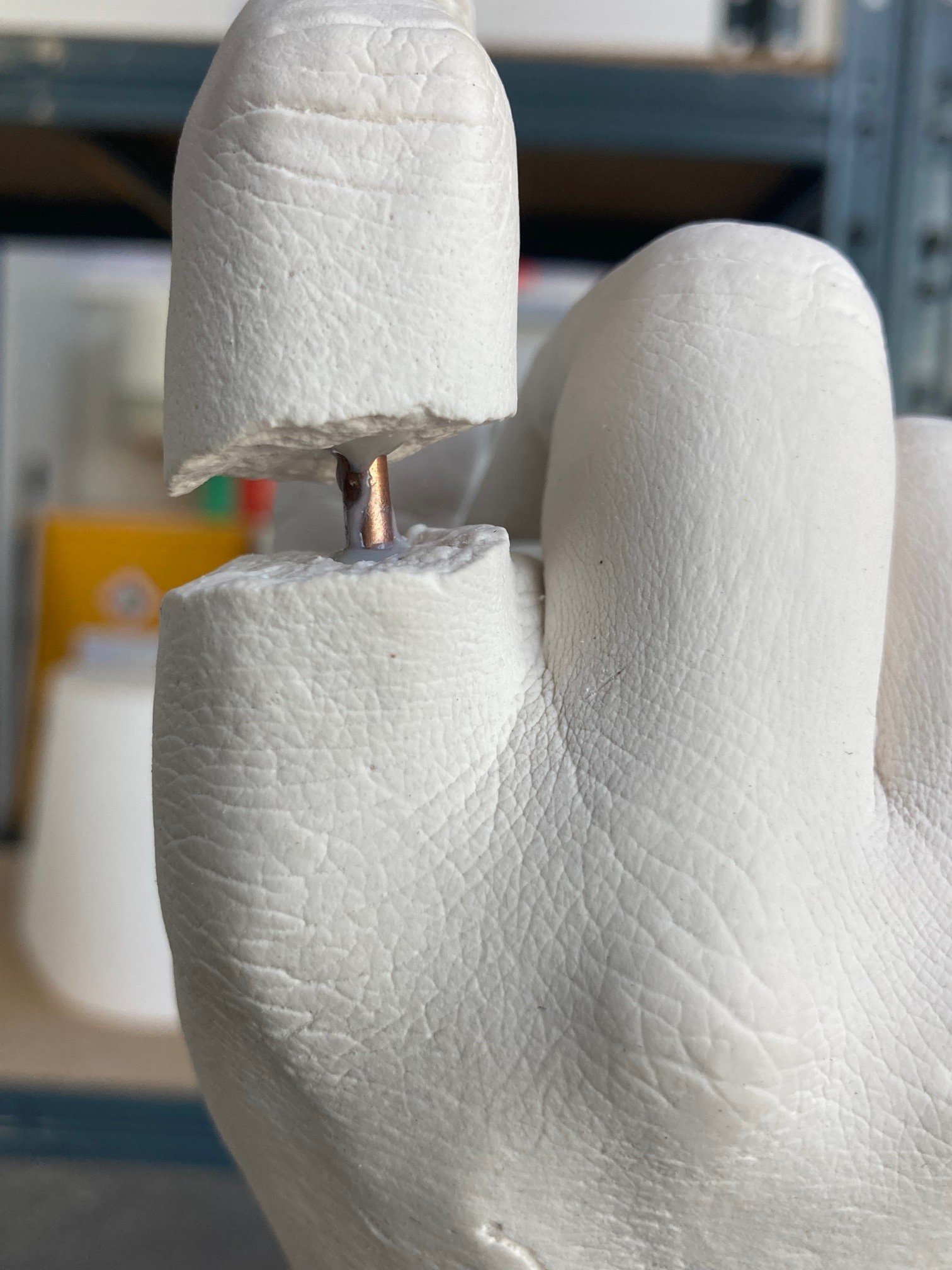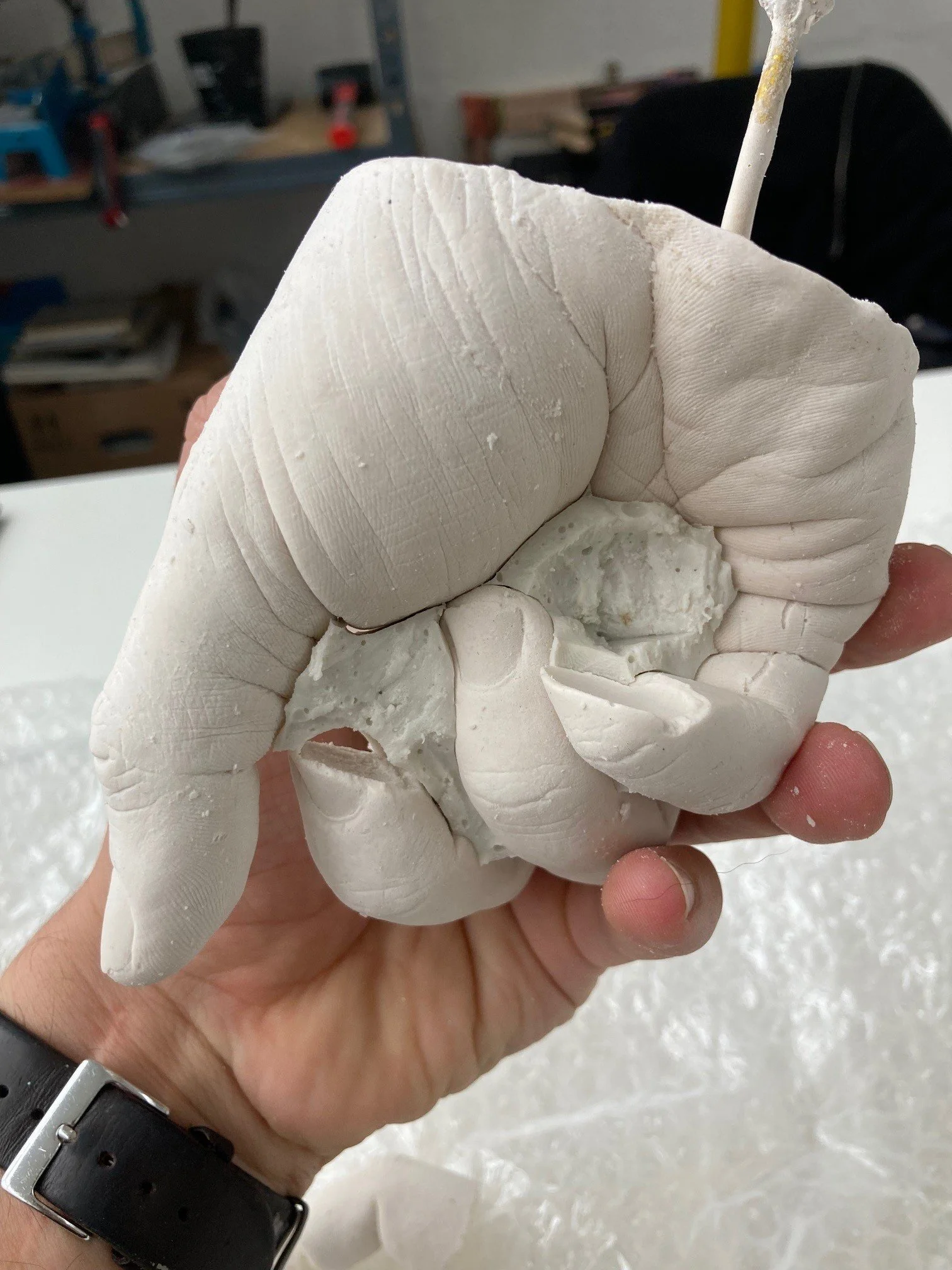





This repair to a cast, held in a vice, has the possibility of movement, a slight extension to the body, an armature, space in-between
Collage? Assemblage?
But its important to remember it’s not hands I am interested in - it’s the space in between
The project is about negative monuments, after all
And the purpose of all this research is not to make clever art, but to make good art.
It’s better if it holds attention long enough for meanings to suggest themselves, not about nailing down meaning
Nothing too fragile, please: concrete hands
piles: sawdust, sand etc.
‘event score’
Unit 3 Presentations
‘bringing different materials together to see what needs to be carried forwards and see what can fall away’
subject/object, simulacra/simulacrum,
embedded meanings within closed systems: alphabet, tarot
with the idea of restacking: don’t disregard the possibilities of the plinth entirely
Leo Steinberg: On Rauschenberg - mapping
William Gibson: atemporality
Daniel chat:
OH: With the totem we have unstackable/rearrangeable that’s something I would like to preserve as I move towards a more resolved work. Because it’s quite a big vision and right now I’m at hands and will gradually build up. I haven’t decided the shape, maybe some will need to move, etc. starting with hands.
So I put this screw in just so I had something to attach it to. Actually I think I want the final piece to be metal. That speaks against rearrangeability but maybe it can be rearrangeable by the artist or by space. These are all points on a continuum.
Practically, to get the hands to be useable. They should have several pins? or a mesh inside? or most obviously a threaded bar? but then how do you join that, if you see it, because it’s ugly and galvanised, usually.
Daniel: well certainly all of those methods might work.
Question for self: Why this ‘monument’ at all? What does it have to do with monuments? What do descriptive gestures have to do with anything?
Answer: Right now it’s all in the getting somewhere. Make and then reflect. Have definite things. See what they say once they are finished and have autonomy. Even better, some parts will be re-arrange-able and re-useable. See what its ‘about’ when its finished. If its about anything.
Resist crits until its finished! Don’t take it apart until it’s done! take a full hour!
Reflection: a screw on hand could be immensely useful for re-arrange-ability. Threaded bar it is. Also the easiest. most disappointing that i still don’t need the metal workshop except to angle grind some bar :(
There is a specificity to each hand, each gesture, which presents a different engineering challenge, a different body. Or at least; different levels of fragility
https://longplayer.org/listen/live-stream/
Singing bowls
1000 year instrument
Supposedly ‘future’ proof
I would prefer it if they didn’t acknowledge that the lighthouse won’t stand for 1000 years - like if it was this impossible thing.
Jem Finer (from the Pogues) ArtAngel (2000): ‘Punk idea that we don’t actually know how to play traditional irish instruments (no-one does) but we’re going to give it a good go and in that we add to the canon’
Techno-barbariansim?
Phase relationships: 1, 3, 5, 7, 11 (primes)
Why did he stick with ‘1000’ years when using seconds? also with 1000 seconds and 1000 minutes for voices. There’s still this whiff of the metric, the metre, (meter, ha). But it’s probably to do with the millenium.
But 60 seconds are derived from the Babylonian sexadecimal system: https://www.scientificamerican.com/article/experts-time-division-days-hours-minutes/
Does Jem Finer/Artangel know this? That he is ignoring that we are already technobarbarians, using a Babylonian divison that feels normal and natural to us - like feet and inches? Does he know that the French tried decimal time and it was a f-in nightmare?
https://www.newscientist.com/lastword/mg25033344-200-why-hasnt-time-been-decimalised/


Maybe its a bit on the nose - they literally describe space as they describe space, ha ha.
What sculptural ideas are there?
Hole/inside
Top?
Stackable (verticality)
Re-arrangeable (unreliable monumentality)
The body in space
Artist-viewer negotiation/co-creation
Formal considerations:
Scale
Weight
Other considerations:
non-uniformity
non-precision
limited pool of gestures
Part 1
Further Reading:
Seth Price: Dispersion
Further research:
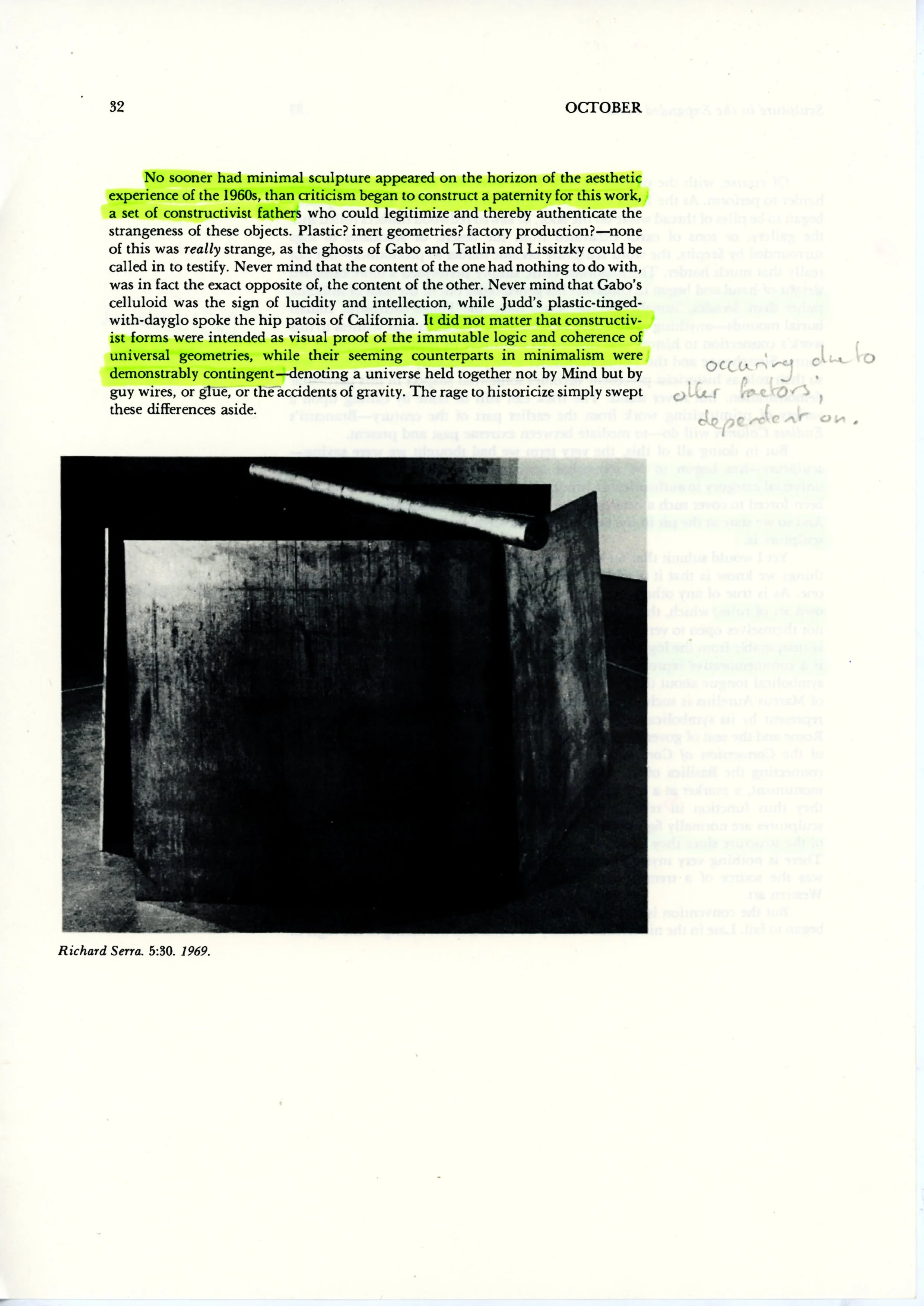
Richard Serra: Tilted Arc
Joseph Beuys: Sozalie Plastik
Manchester Piccadilly Gardens Berlin Wall - actually Tadao Ando (2002)
Go see:
Christo Early Works, Gagosian
https://gagosian.com/exhibitions/2023/christo-early-works-curated-by-elena-geuna/
Growing popularity of inflatables …
Soloveiko Songbirds [Nightingale] Svitlana Reinish - UAL Wimbledon
Rosie McGinn - UAL Wimbledon alumni
Doug Fishbone - GCCA/Chelsea MA & foundation dip
Relation to performing arts? entertainment?
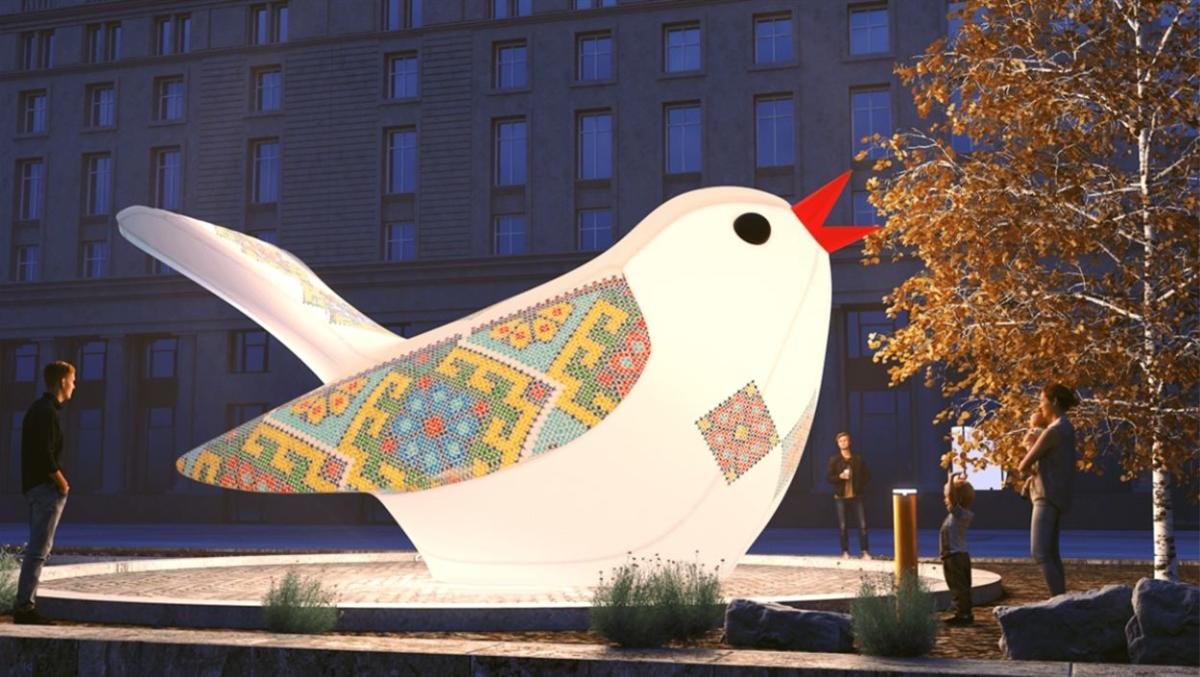
Soloveiko Songbirds [Nightingales] Eurofest Liverpool
Svitlana Reinish/Amgio & Amigo / M3 Industries
(I worked on this. I have first hand experience of ‘inflatables’. The improbability of working with non-spheres is somewhat undermined in my view once you realise you have to hand-ball 4 tonnes of concrete blocks into each bird to avoid tethers. My instant reaction would be to show the blocks. This is what Aleksandra Mir touches on in Sculpture Unlimited ‘who cares about sculpture? i just want to make impossible things!’ when she decides that it’s impossible NOT to make a feature of the installation/dismantling. However she backs away from that by still doing the plane and she cheekily lays claim to the all the technicians as part of the art, people who i suspect would not prefer to be thought of as performer-participants but full collaborators. Like, she doesn’t extend their collaboration to the drawing or the workshop, for example. Structural engineering drawings aren’t shown. She only ‘shows’ what she cannot avoid showing. IMO there’s also an unfortunate ‘bow’ to the front of the plane but maybe that’s ok but it gives away the materiality. McGinn and Reinish use air - so its ‘live.’
However, the framework of 30 years cultural exchange with Ukraine was very joyful. SRs work was about showcasing Ukraine but its relevant here for this discussion of monumentality - and also blurring with ‘entertainment’ (or ‘life’))

Alexandra Mir - Plane Landing
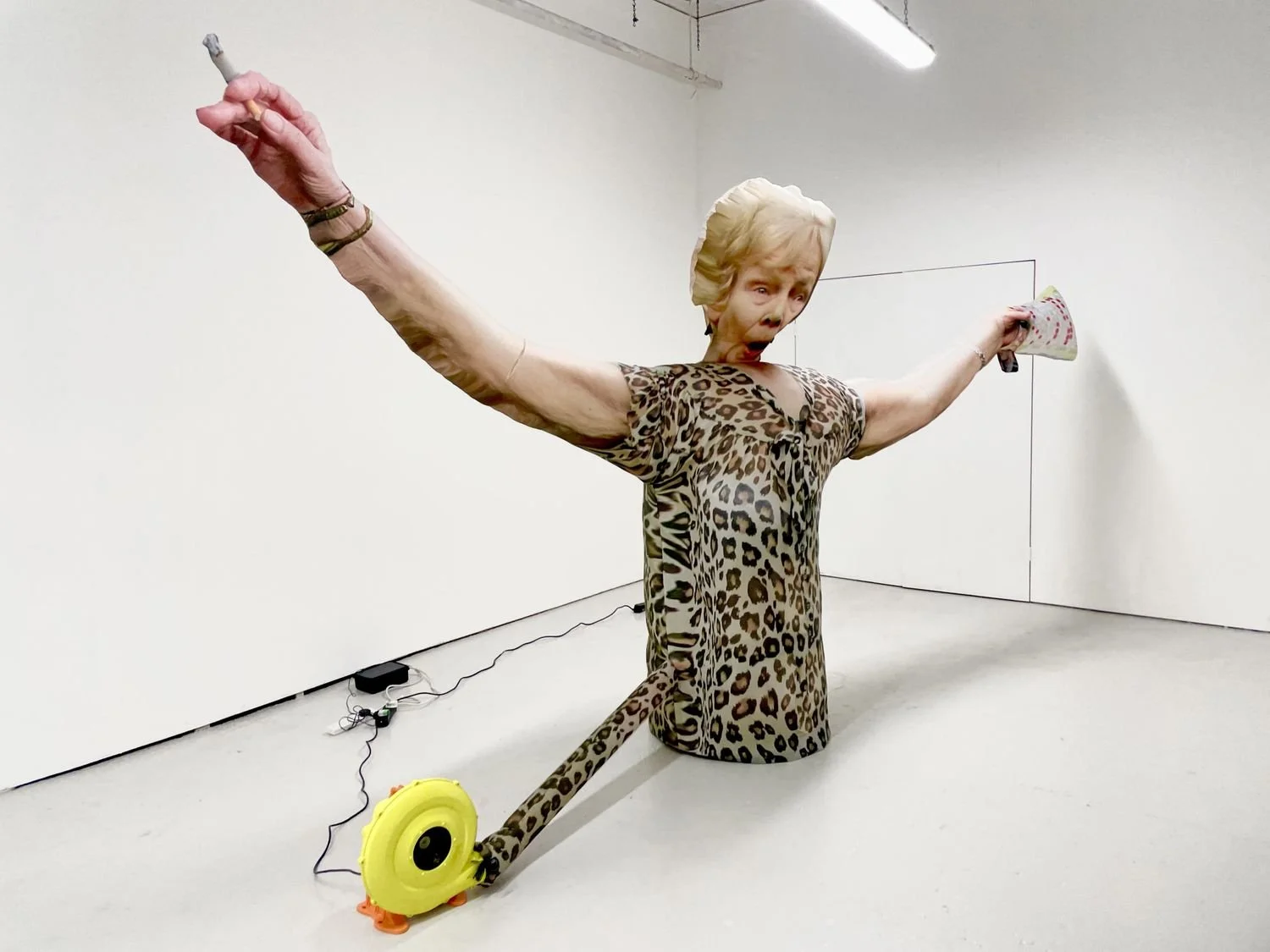
Rosie McGinn - Howse - HYPER-deflation, Paradise Works, Salford
Division of Labour (Nat Pitt) with Dean Kenning (from the Fruitmarket. Class?)
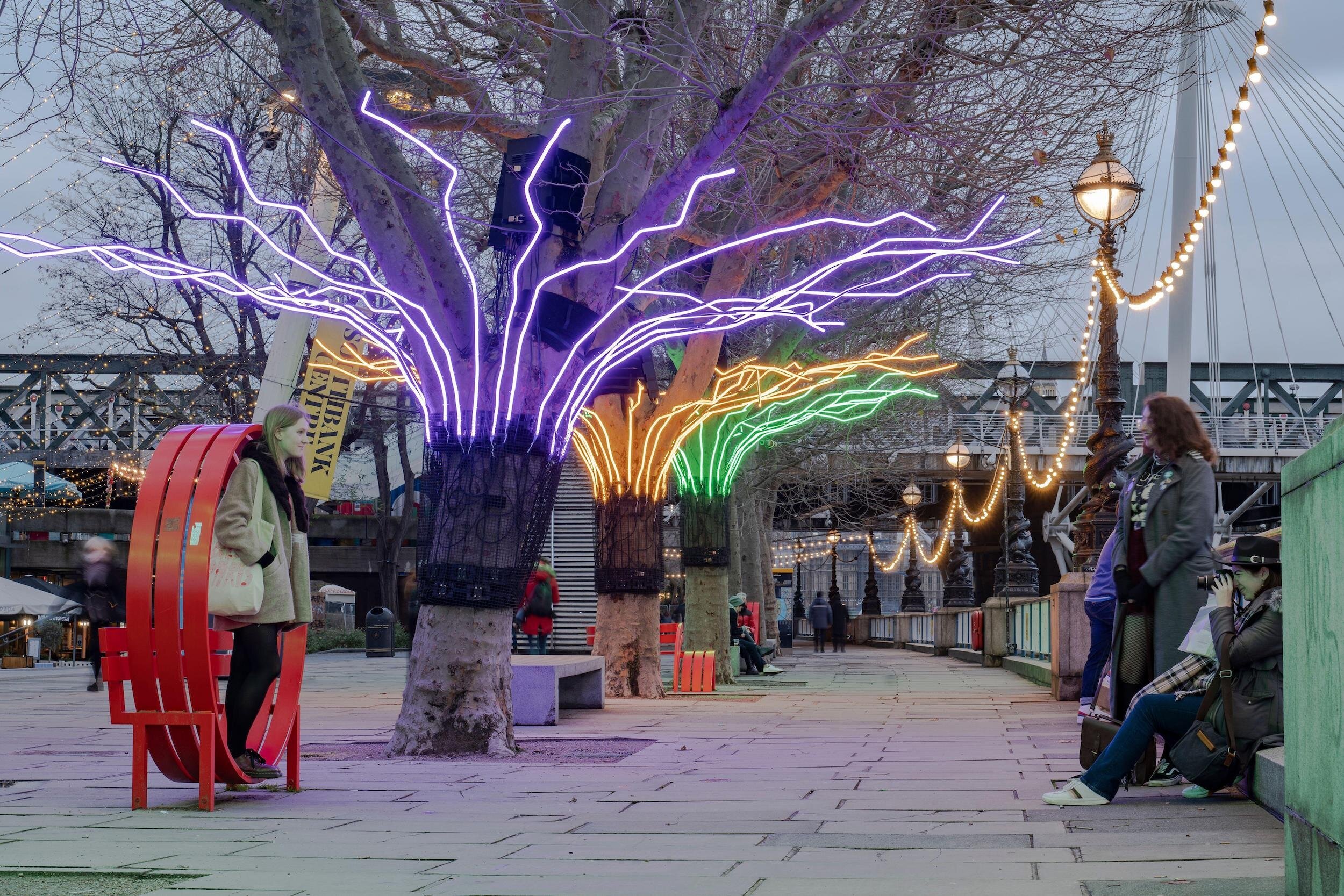
David Ogle - LOOMIN
Southbank 2020-23
(I worked on this too. Another approach to temporary monumentality with links to drawing. The work is suspended improbably using a ‘finger trap’ tension system and taken down and put up each year. Although it also can fall into a ‘entertainment’ trap on a bad day(?) or me it is the most successful. The improbability of it’s longevity is also impressive; it isn’t powder coated and the protective boxes are made of plywood.)
ps. why not be entertaining

Richard Serra Tilted Arc 1981

Tadao Ando 2002 Pavilion for the Commonwealth Games
Referred to locally as the ‘Berlin Wall’ dismantling began in 2021
Starting totems
11.10.23
The first totem was round, squat figures. These require a lot of hollowing out and present a lot of challenges when joining. Plus I tried to get the hands working, but got quite carried away with the ability to produce ‘clothing’ from ‘slabs’ of clay. In the end the hands were totally lost in the design. I did learn
1) that you can get a really interesting join/crease by allowing a joined slab to overlap itself
2) you can get nice intentional palm prints on a ball as you can slap it quite hard. This is nice to preserve as it rewards close observation and also is a clear hand trace
12.10.23
The second totem is built in planes/cardinal directions/oblongs. It allows a high degree of abstraction meaning there’s only hands and totems
1) it could be abstracted further into just squares on blocks
2) scoring for slip creates a an interesting incision which could be built on
3) next time if the bodies are built from slabs this would allow them to have a smooth inside and prevent the need for leather-drying and hollowing. I could also allow the join to be seen as this would give visual interest to the back. It could even allow viewing in which is ‘anti-totem’
4) a design problem was posed by the pointing fingers. In the end the hand was divided into planes but they are mirrored on the z and x axis (not just one, like, the finger is ‘surface plane’ on one hand and ‘second plane’ on the second hand)
5) the strange arm was resolved with a sculptural/ceramic idea of the curved arm
Research: I asked around the faculty for gestures. Blythe had a lot to say about why we should use metric but accidentally gave away three. Leah thought of two very intentionally then stopped, and both involved movement. (student) gave me a one-hnaded gesture for height and then stopped.
one-fingered gesture, ha.
These are descriptive gestures?
A monumental gesture
Could the be built modularly, in theory be a restack-able monument? Or a monument that can be taken down and re-arranged? Isn’t that cool in the era of statue toppling like yes you can change it, you can take it away from verticality, but it also has this idea of no-obselencse built in, a slightly conservative principle. Cool contradictions.
And if they were built at scale? If they were foam and the back was a contrivance? if you could go inside, what would be inside? human scale? child scale? crawling scale?
Style note: Quotes are used for notes and otherwise transcribed from memory
OH: So I came to Camberwell saying that I wanted to reconcile two kinds of chance somehow. But actually I’ve had a lot of chance to read and I sense that they are basically extending from a similar point in two different directions, like we are here now, chance processes would be nice to put down for a while, I’ve been carrying them since BA and although they aren’t exhausted and they have helped to keep everything going, I’m tired of them because the cool thing about them is be-here-now. As in I guess in the history there are two main schools, one is a ‘camera shutter’ with a level of surrendering authorship to an automaton and at the other end you have chance processes with performer-participants. Both are linked to the history of chance operations which is in surrealism; both the sense of ‘automatic writing’ in the former and a sense of ‘subconsciousness’ or interruption in the other. And in-between there are other points, the event score, The Large Glass etc.
MDSG: Duchamp is an interesting example because it has lots of other things in there like whenever we look at Duchamp we are drawing on so much more like his readymades were often remade later
OH: Yes like Frenchness with the chocolate grinder and Catholicness with the bachelors and the breaking at the end but yeah. Also there’s the mausoleum quality to (unremembered) and so anyway I have these drawings.
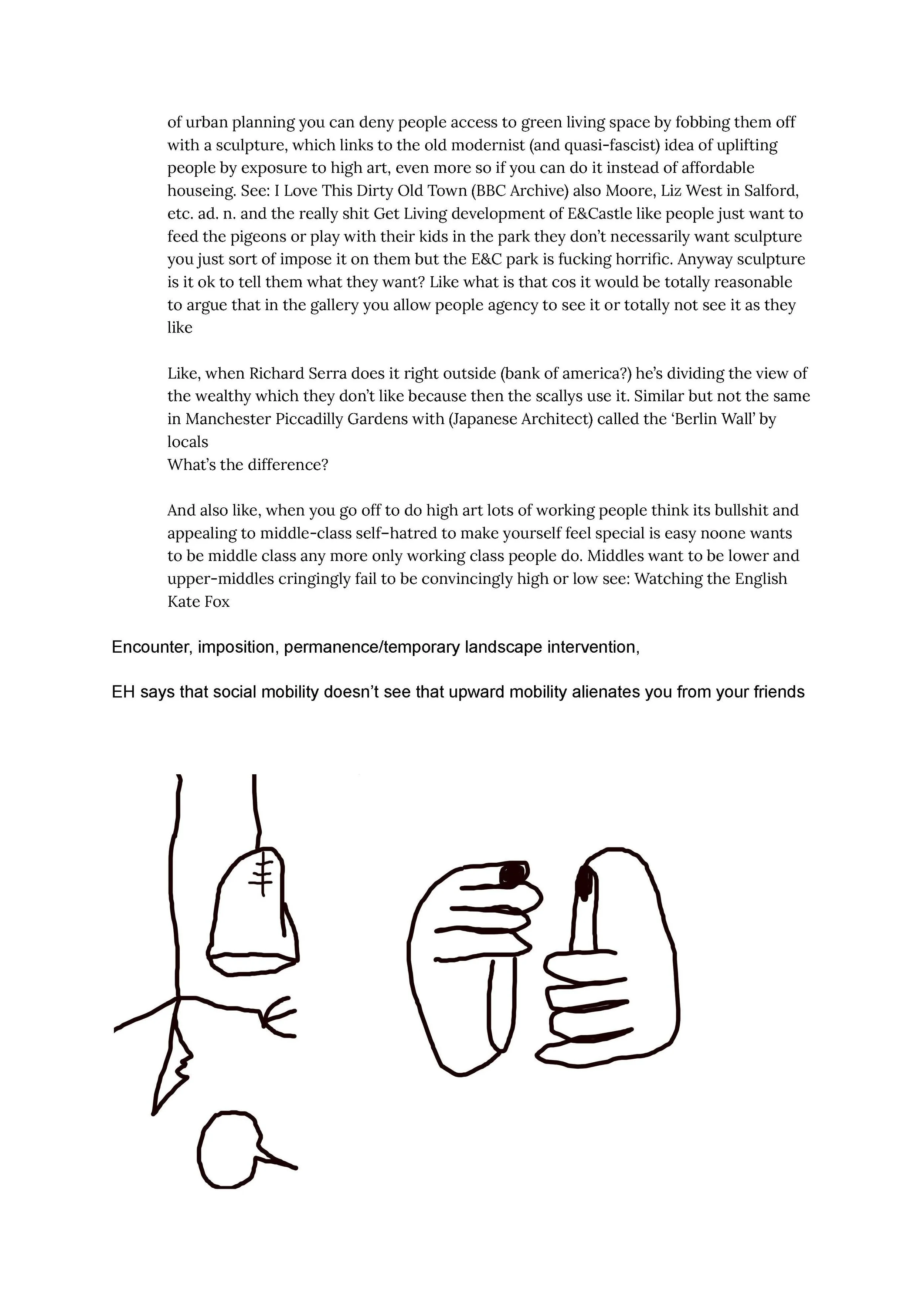
It’s a plan for a totem the influences are small gestures of measurement and the totems at the British Museum, one in particular …


What are the gestures? (M)
A series (of figures, stacked)
Stacking
Monument - an ironic monument to something guessed or to monuments or to something small?
Urban and landscape (OH)
Language - non-verbal language
Non-specificity in the monument and specificity in the workshop sometimes is needed
Certainty and un-certainty
History (like monuments remember things and often they are quite small but not always, like studs in the street or plaques or they take all forms (at least in Britain))
Post colonial/historical legacy
Symmetry and non-symmetry. Lateralisation. Like how it’s a level of tolerance in the workshop (1mm) and often more as a human at human scale. So what are the gestures
Well the problem is a lot of these gestures actually aren’t symmetrical so what do you do with the other hand? (OH)
- Ok good because now we are in an artistic problem not a grand social problem (MSDG)
Monuments don’t have to go up (MSDG)
Do some gestures have to move?
Memorilising small things?
What is a minor work? Compared to a major work. Like even Ulysses is made up of loads of small moments. Like everything is overwhelming. (MDSG)
What if all the elements are there, but less? Or smaller?
Journalling note:
What is the role of antagonism?
Magnets
Ritual and repetition - still relates to chance through ‘moments’ like but not laying claim to those moments just that those moments might remind you of other moments and of my work and that’s enough
ps. this gesture also comes from a yoga thing of trying to bring two things together. Like I’m not saying that yoga is necessarily a thing but also don’t ignore thing and anything can be a resource
p.p.s. more drawings from the BM


Chance Whitechapel editions 2010 edited Marget Iversen